


Scarica l’App!
Manduria within your App. Download it now!


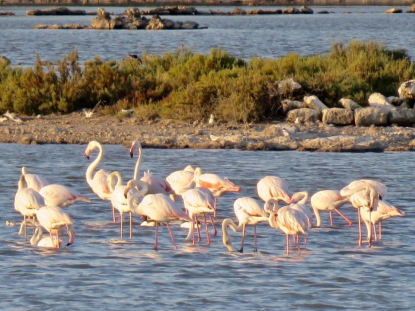


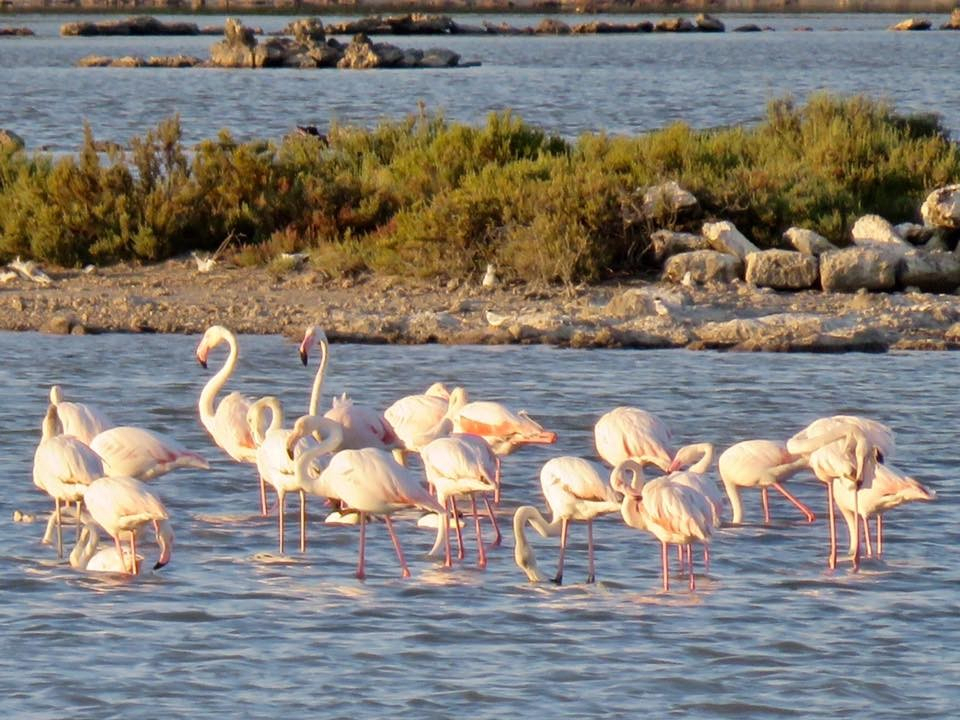
The salt pan, called dei Monaci because it was managed by the Benedictine monks of Aversa until 1404, extends for approximately 250,000 square meters close to a stretch of coastal dunes located west of Torre Colimena. It is a depression, closed by dunes towards the sea and by hills on the land side, into which the sea water initially poured by storm surges, then channeled into two conduits cut into the tufaceous cliff, was regulated in the influx from special wooden locks, the housings of which are still visible. The extraction of salt, carried out for centuries in this salt pan as a profitable activity, is demonstrated by the presence of a deposit built on the rocky north bank of the same with well-squared blocks of calcarenite (tuff). Next to this building there was a tower (now reduced to a ruin). To the west of the depot, a few meters away, there is a small church dedicated to the Madonna del Carmelo, which is also now in a strong state of decay. Although the architectural spectacle that presents itself to the visitor is desolate, the surrounding area is particularly interesting from a naturalistic point of view, both botanical and faunal. The Salina dei Monaci was, in fact, included in the S.I.C. of the “Natura 2000 Network” and became an Oriented Regional Reserve with Regional Law n°24 of 23 December 2002. In this habitat the halophilous flora of the silt, the Mediterranean scrub (especially myrtle, mastic, strawberry tree, thyme, heather) grows luxuriantly. , the shrubby garrigue and the herbaceous type. In spring, egrets, black-winged stilts, kingfishers, pink flamingos and many other birds choose the salt pan as a resting area where they can find nourishment.
 Condividi
Manduria within your App. Download it now!
Scarica l'app PWA utilizzando il browser Chrome
 Fai clic su Altro in alto a destra
 Seleziona Installa l'App
Scarica l'app PWA utilizzando il browser Safari
 Fai clic su Altro in alto a sotto
 Seleziona "alla schermata iniziale"

Questo sito web utilizza cookie per migliorare l'esperienza di navigazione. Cliccando su “Accetto”, dai il consenso al loro utilizzo.
Accetta
Successo!

